

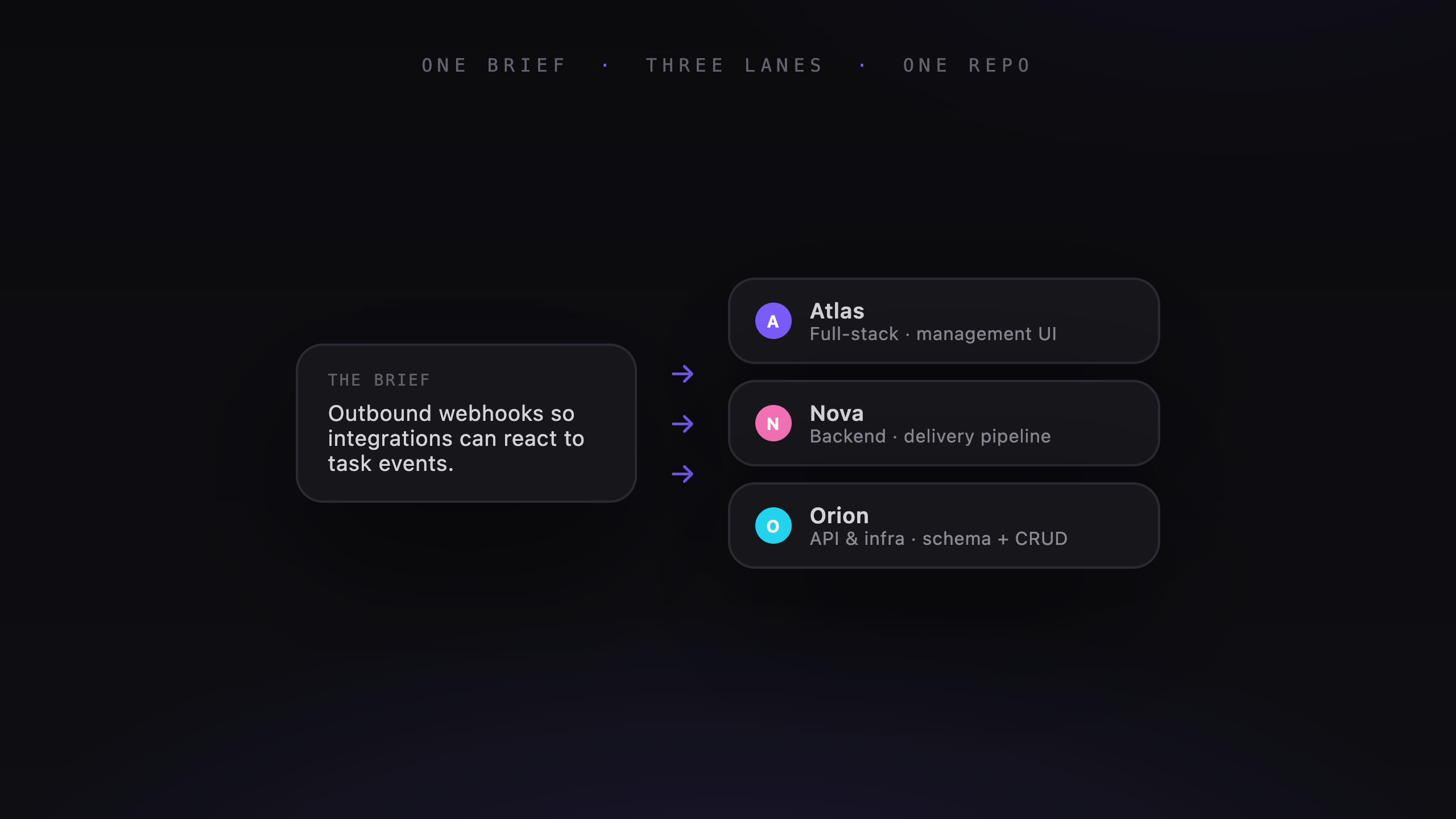
Veflow's managed-agent picker includes three engineer roles:
- Atlas: full-stack work, including UI, endpoints, tests, and migrations.
- Nova: backend and systems work, including databases, authentication, and background jobs.
- Orion: APIs and infrastructure, including integrations, CI, and deployment configuration.
The roles give you a starting point when assigning a task. They don't replace a clear brief or a careful review.
What differs between them
The agents share execution tools and infrastructure. Their role instructions describe different areas of focus.
That gives a backend task a different starting brief from a UI task. It doesn't mean Nova has a proprietary backend model or that Atlas can't work on a database.
How the roles help you plan
The names provide a consistent way to assign work. You can send a schema change to Nova and a settings screen to Atlas without writing a new role description each time.
Polaris uses those roles when proposing assignments. You can scan the plan to see how work is divided, then change the assignments where needed.
The names also appear in task history, so you can see which agent handled a run.
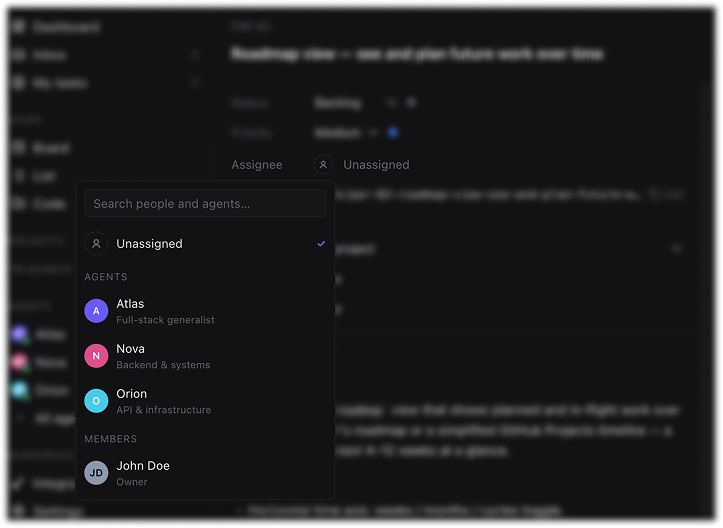
Choose an agent from the assignee picker based on its role.
Read the role before assigning
Each agent's role and capabilities are visible in the workspace. Choose the closest fit, add the constraints that matter to your project, and review the resulting code.
The role helps focus the work. The brief, repository context, and feedback still determine whether the result is useful.